
The dish
Corvina and shrimp rice
Carolino rice from the Ribatejo, soupy and loose, cooked to order. Some fish rices are made with one stock — this one is made with three.
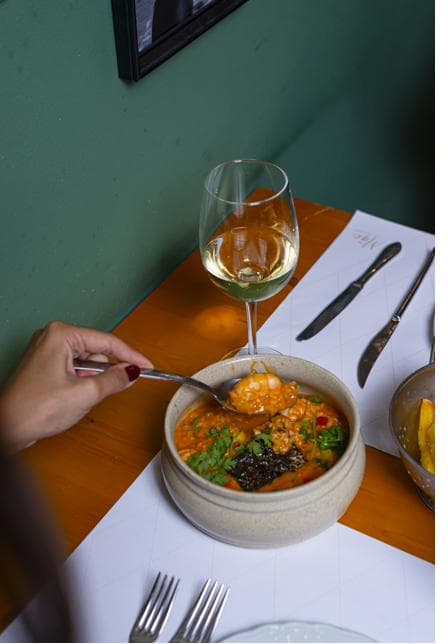
It comes from mornings at the market beside the chef's grandmother — and it is the one dish that appears on the à la carte menu, the set lunch and the group menu alike.
The corvina
Corvina — meagre — is a versatile fish, with a texture and flavour that go particularly well with rice and shrimp. It has enough character to stand out on the plate, yet lets every element complement the others without any one of them taking over.
It arrives whole in the kitchen, always fresh. We check it on arrival and only then break it down. Nothing is wasted — the bones go into a stock that becomes one of the bases of the rice.
We work with corvina all year round, which is why this dish never leaves the menu.
Three stocks
This rice is built on three different stocks, all made in our kitchen: fish, shrimp and cockle.
Each adds a layer of flavour. The fish brings depth. The shrimp adds intensity. The cockle gives that unmistakable taste of the sea. It is the combination of the three that gives the rice its richness and its complexity.
The rice
Carolino rice from Bom Sucesso, in the Ribatejo — the same region the chef comes from. It is a rice deeply tied to our tradition, with an excellent capacity to absorb the flavour of the stocks and release starch as it cooks.
We want it malandro: loose and soupy, creamy and enveloping. Not a dry rice, but not one where the grain collapses either. The balance between the stock and the bite of the grain is what decides this dish.
Cooked once the order is in
The shrimp is cooked directly in the rice, at the moment the order comes in. That is how it takes on the flavour of the dish while keeping its texture and succulence.
The stocks and ingredients are prepared beforehand, but the cooking and the finishing only begin once the order reaches the kitchen.
“I don't like setting a rigid time for a rice. Good cooking needs its own time.”
The finish
At the end comes a knob of butter, for gloss and a more enveloping texture. Then lime and fresh coriander, which bring acidity, freshness and balance to the whole.
His grandmother's kitchen
“I still remember the smell that came out of that kitchen.”
From early childhood the chef spent his days with his grandmother. They went to the market every morning, and he would stand there watching the fish with enormous excitement.
His grandmother ran a well-known restaurant and was a master of fish rices. It all looked so simple: good fish, a good stock, a few aromatics, and the party was made.
This rice is a tribute to that kitchen. A kitchen that respected the product, that had no need to complicate, and that knew that when the ingredients are good and handled with care, the result speaks for itself.
Frequently asked questions
- Why corvina, and not another fish?
- It is a versatile fish whose texture and flavour go well with rice and shrimp. It stands out in the dish without overpowering the other ingredients.
- Is the fish fresh?
- Yes. It arrives whole in the kitchen, is checked on arrival and broken down by us. The bones go into the fish stock.
- What rice do you use?
- Carolino rice from Bom Sucesso, in the Ribatejo. It absorbs the stocks well and releases the starch that makes the dish creamy.
- Is the rice dry or soupy?
- Soupy — rich in stock and creamy, but with the grain intact. That is the balance we look for.
- How long does it take to reach the table?
- The stocks are ready, but the cooking starts once the order is in. There is no fixed time: the rice takes the time it needs.
- Is it always available?
- Yes. We work with corvina all year round, so the dish stays on the menu consistently.